


Executive summary
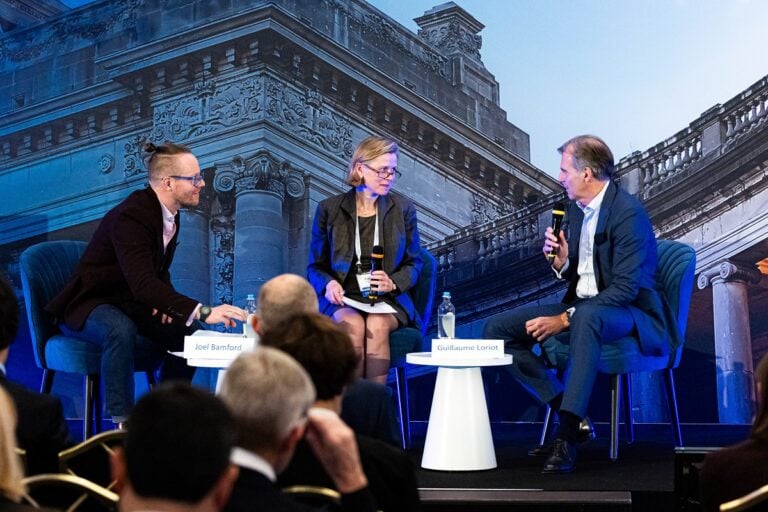
The CRA Brussels Conference session “Spotlight on Merger Guidelines” brought together senior enforcers from the UK and EU to examine how merger policy is adapting to a world defined by dynamic markets, innovation, resilience concerns and rising geopolitical complexity. Moderated by Professor Fiona Scott Morton (Yale School of Management; Senior Consultant to CRA), the discussion featured Joel Bamford (Executive Director for Mergers, UK Competition and Market Authority (CMA)) and Guillaume Loriot (Deputy Director‑General for Mergers, DG COMP).
Against a backdrop of technological advancement, resilience challenges and heightened geopolitical complexity, the discussion highlighted the need for merger control frameworks that can adapt to new dynamics without losing sight of established competition principles. Senior officials reflected on reforms, ongoing reviews and the practicalities of navigating multifaceted merger cases in an increasingly interconnected world.
Emerging from this dialogue are several key themes shaping the future of merger policy. Central among these are the drive for greater procedural transparency and efficiency; the rise of concepts such as resilience, scale and innovation in merger analysis; and the challenge of balancing these new priorities with foundational concerns such as price, quality and consumer choice. Both authorities underlined their commitment to evidence-based decision-making, robust frameworks for assessing efficiencies and careful scrutiny of remedies—particularly as novel market realities require flexibility yet demand clarity and predictability for businesses and consumers alike.
UK CMA: Accelerating Procedural Reforms and Transparency
Opening with developments in the UK, Bamford described a year of change for the CMA. While the authority’s substantive merger guidelines were updated back in 2021, the past couple of years have focused on improving procedural elements, including timing and engagement.
Streamlining Phase I and Phase II timelines
Phase II processes have been reshaped to allow for more direct dialogues between the businesses on the one side and the CMA on the other, as well as for clearer and more upfront visibility on how to narrow down the main concerns and where remedies may lie. Earlier this year, the CMA also announced changes to its Phase I practices, including a target of roughly 40 working days for pre‑notification, with the aim of reducing the uncertainty created by increasingly lengthy preliminary phases. Additionally, the businesses would be updated by the CMA throughout the process. This is particularly relevant in complex, multi‑jurisdictional mergers post‑Brexit. At the same time, the CMA aims to accelerate clearance for cases where concerns can be ruled out early, issuing shorter decisions at greater speed.
Building a culture of engagement
A broader shift towards transparency and dialogue underpins these reforms. The CMA has created additional points for face-to‑face engagement throughout investigations and introduced post‑case feedback sessions between the businesses and the CMA – an opportunity, Bamford noted, that businesses increasingly value. A newly published Transparent and Disclosure statement articulates expectations for openness on both sides. He also highlighted the need to dispel persistent myths, such as the advice some parties receive from their external advisors to avoid meeting the CMA for fear of “signalling problems” – precisely the opposite of the CMA’s intended approach.

EU Commission: Navigating the Merger Guidelines review
Turning to Brussels, Loriot offered insight into the European Commission’s ongoing review of the EU Merger Guidelines, characterising the process as both challenging and lively. Extensive public consultations and workshops – with economists, businesses, trade associations and academics – have signalled several emerging topics.
Predictability in an era of geopolitical pressure
One theme is the expectation from businesses for predictable, rule‑of‑law‑based framework, anchored in sound economics and transparent reasoning. In an era where geopolitical pressures risk politicising enforcement, such predictability offers businesses security and confidence that decisions will remain evidence‑based rather than unjustified or discretionary. Similarly, predictable and agile framework is needed for newer concepts such as tech markets or dynamic effects.
Defining resilience, scale and innovation
Another issue concerns the emerging concepts that increasingly feature in merger debates. Loriot pointed to resilience, a term invoked frequently but often lacking a proper definition: does resilience demand more suppliers, fewer or more integrated supply chains? Likewise, discussions about scale reflect Europe’s incomplete single market more than any shortcoming of merger control itself. And innovation, now central to many cases, cuts both ways – sometimes as a theory of harm, sometimes as an efficiency – requiring guidance that is flexible enough for dynamic markets but stable enough to endure.
Price competition still matters
Ultimately, he emphasised, that price competition still matters. Even as attention shifts to long‑term innovation, resilience, and strategic autonomy, traditional competitive drivers – price, quality and choice – remain fundamental for consumers and for Europe’s industrial competitiveness. The challenge for modern merger control is to integrate these new dimensions without losing sight of those core principles.

Efficiencies and dynamic effects: Beyond “washing” claims
The conversation then explored efficiencies and dynamic effects, an area where both agencies see the need for clearer frameworks. Calls for updated guidance often come from firms seeking recognition of innovation benefits or resilience‑related efficiencies – yet, as Professor Scott Morton observed, such theories frequently highlight the value of more, not fewer, independent rivals. Bamford noted that the CMA plans to launch a review of its approach to efficiencies, examining how to assess whether benefits are timely, likely, sufficient and merger‑specific, and what could be learned from companies and investors – such as investment firms, venture capitalists or private equity – who routinely analyse efficiency and innovation potential. Both he and Loriot warned against various forms of “washing” (innovation‑, investment‑ or growth‑washing), where speculative future benefits are invoked without robust evidentiary support.

Remedies: Structural solutions remain the gold standard
The panel then turned to remedies, an area where practices continue to evolve.
CMA’s pragmatic approach to behavioural remedies
Bamford explained that the CMA’s new draft remedies guidance reaffirms three principles: remedies must be effective; structural solutions remain preferred over behavioural; and behavioural commitments have a place where risks can be mitigated and monitoring is realistic. Debate has centred on the CMA’s acceptance of an investment‑linked remedy in a recent telecoms case, but Bamford stressed that the authority is not opening the door to vague investment promises. In that case, he explained, the CMA found substantive concerns, and the remedy – co‑designed with the sectoral regulator Ofcom – locked in concrete investment plans that were enforceable and tied to licensing obligations.
EU’s continued preference for structural solutions
Loriot echoed the Commission’s longstanding approach: structural remedies are still preferred. While some exceptions exist, particularly where market practice supports non‑structural solutions, he stressed the need for caution. Investment remedies often do not compensate for lost price and quality competition, and long‑term commitments may become misaligned as markets evolve. Public consultation responses, including from telecom regulators, have reinforced this scepticism.
The resilience question: Competition policy vs. industrial strategy
In closing, the panel addressed the rising prominence of resilience, strategic autonomy and security of supply in economic policy. Bamford argued that such considerations encompass a wide range of meanings and must be grounded firmly in evidence when they intersect with competition policy. Many aspects – industrial strategy, security, public interest – lie outside the remit of merger control and are rightly the responsibility of governments, not competition authorities. Loriot added that shrinking global trade and supply‑chain fragmentation create new competitive realities but warned against allowing resilience to become a cover for protectionism. For Europe, he argued, strengthening the single market remains essential to achieving pro‑competitive scale.
CRA will continue to provide economic analysis and strategic guidance as these policies evolve.
