


The 340B Drug Pricing Program was enacted in 1992 as a mechanism to financially assist certain hospitals (covered entities) that care for low-income or uninsured patients.
These entities receive discounts on all eligible covered outpatient drugs. The program has expanded substantially over the years, with the number of covered entities growing by 174% between 2013 and 2023, and 340B Program sales growing from $53.7B to $66.4B (+23.4%) between 2022 and 2023.1
Due to pushback by pharmaceutical manufacturers, a new program is being piloted by the Health Resources and Services Administration (HRSA).
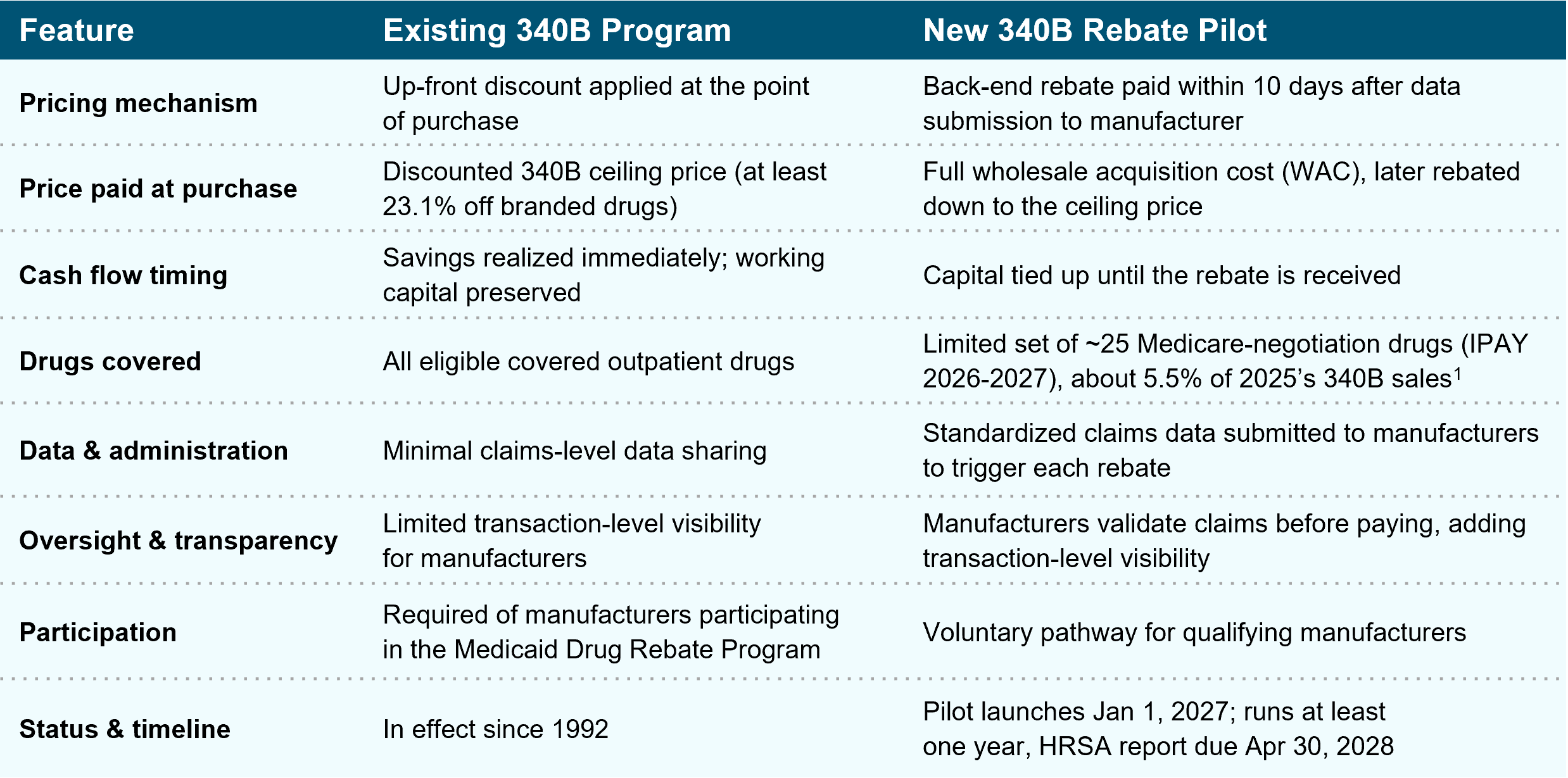
Existing model vs. Rebate Pilot at a glance
Under the existing program, manufacturers provide up-front discounts to covered entities at the point of purchase. The pilot instead effectuates the 340B ceiling price through a back-end rebate on a limited set of medications. The two approaches compare as follows:
Strategic implications for the 340B Rebate Pilot Program
Opportunities
- Participating manufacturers can validate claims before rebates are paid, introducing a new level of transactional transparency. This should help to reduce duplicate or inappropriate claims.
- A 340B entity’s experience with rebate payment may become a differentiator for manufacturers.
Challenges
- 340B entities may prefer the up-front discounts from products that are not participating in the model. It may also introduce longer-term cash flow constraints for covered entities.
- Significant data infrastructure is required by both the covered entities and the manufacturers to submit claims data, validate, and process claims to issue rebates within relatively tight timelines.
