


Are GLP-1 weight-loss therapies growing primarily by expanding the treatment population or by capturing share from existing obesity therapies?
Obesity afflicts over 40% of American adults, though only a fraction of patients have received meaningful pharmacotherapy historically. The advent of highly effective GLP-1 and dual incretin treatments, such as Wegovy and Zepbound, has changed obesity from a lifestyle management-focused condition to a market with scalable medical treatment options.
Industry forecasts predict that the global GLP-1 market could exceed $190 billion by 2035, with expanding indications, wider reimbursements, and more oral formulations.1
Study objective
As obesity therapies grow rapidly, manufacturers and investors are trying to understand whether market growth is being driven primarily by patients starting therapy for the first time or by patients switching between anti-obesity medications. Using Komodo claims data, we evaluated prior-weight loss treatment experience among patients receiving Wegovy, Zepbound, and phentermine.
What we found
Most patients began GLP-1 treatment without prior weight-loss drug experience. Prior weight-loss drug use was rare among phentermine patients, with only a small share having previously received another obesity therapy.
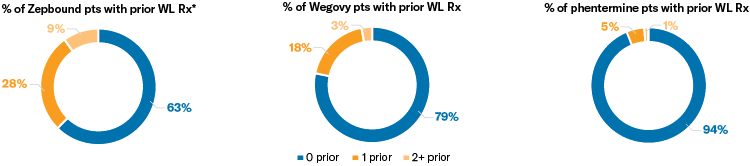
Figure 1: % of patients with prior weight-loss Rx (WL Rx)*
Data Source: Komodo Claims Data – 2025 Analysis Year
*Weight-loss (WL) Rx claim defined as Zepbound, Wegovy, Saxenda, Phentermine, or Contrave (Naltrexone HCl – Bupropion HCl) – Zepbound-treated (n=214,448), Wegovy-treated (n=108,493), Phentermine-treated (n=77,973)
Figure 1: Across the obesity patient cohorts, Zepbound patients have the highest rate of prior weight-loss drug use. 9% of Zepbound patients have tried two or more weight-loss drugs prior to Zepbound compared to 3% of Wegovy patients. Approximately 30% of Zepbound patients have tried one prior weight-loss drug compared to nearly 20% of Wegovy patients. By contrast, few non-GLP-1 treated phentermine patients have tried a prior weight-loss drug (~6% total).
Prior treatment histories suggest Zepbound is emerging as a preferred escalation option. The data point to a meaningful flow of treatment-experienced patients toward Zepbound, particularly from Wegovy and phentermine.
Figure 2: Prior therapy pathways among weight-loss drug patients
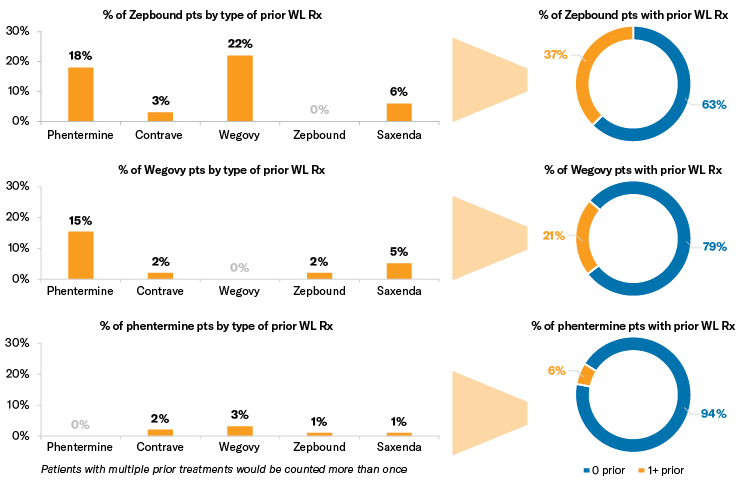
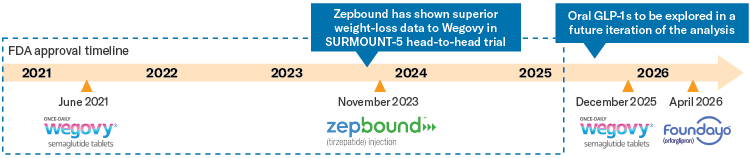
Figure 2: Of the Zepbound patients who have tried one or more WL drug before Zepbound, prior Wegovy and/or phentermine is common. By comparison, few Wegovy patients have tried Zepbound before starting on Wegovy. This is likely due in part to Zepbound’s later approval versus Wegovy and Zepbound’s superior data, which makes the progression of Wegovy to Zepbound more likely than the reverse order.
Conclusion
GLP-1 therapies are expanding the obesity treatment market based on the large volume of patients with no prior weight-loss drug use (among major products) across all cohorts.
Obesity manufacturers should consider the following findings from this analysis as the market continues to evolve:
1. The obesity market is still in the penetration phase.
2. Zepbound is showing a lot of interest as an escalation destination.
3. Persistence will be the next test for these new medications.
Future analyses incorporating 2026 market entrants will shed more light on the rapidly changing landscape.
1https://www.aha.org/news/headline/2026-02-26-cdc-finds-record-high-obesity-rateschildren-teens-adults-have-slight-decline

