

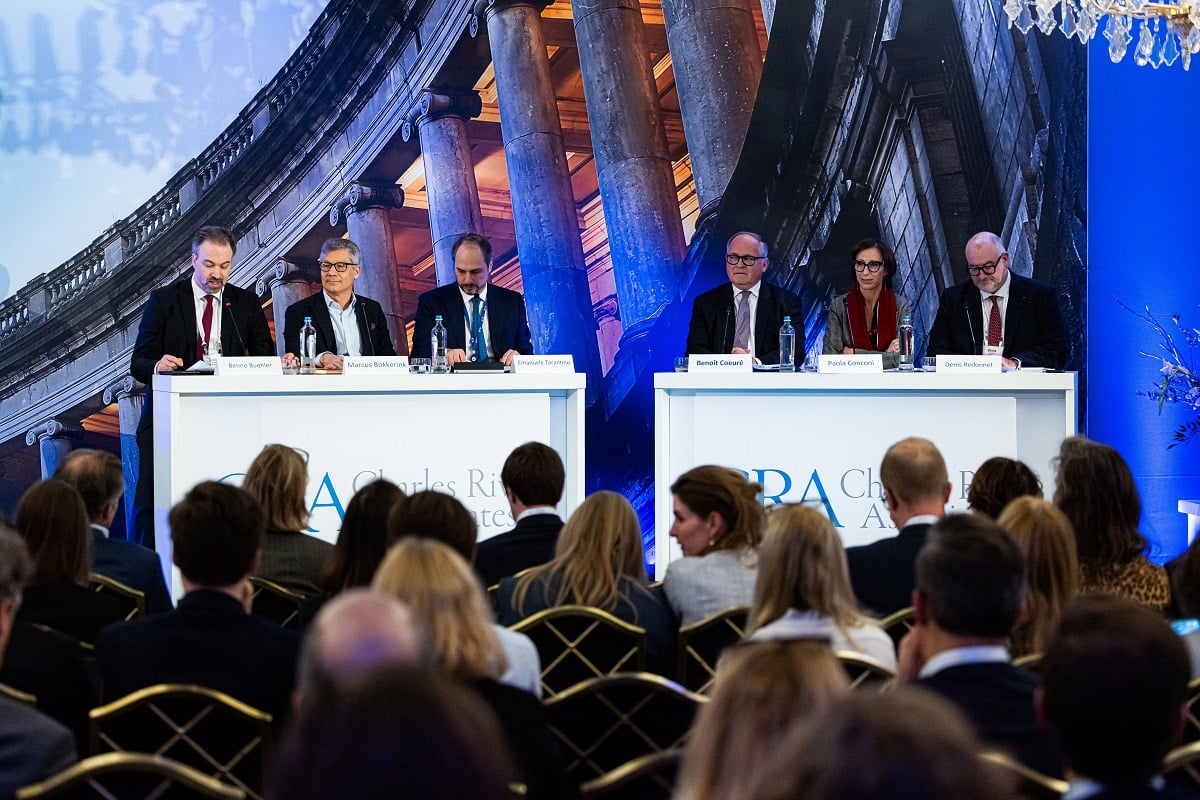
Recent discussions at the Annual CRA Brussels Conference highlighted how trade and competition policy are evolving under the pressures of geopolitics, security concerns and industrial strategy.
In the session “Competition and Trade: Partners for Growth in a Global Economy?” panellists described how European trade policy has shifted from pure efficiency towards safeguarding economic security, with new tools like the Foreign Subsidies Regulation (FSR) responding to gaps in existing rules.
There was debate over whether competition enforcement should factor in trade defence and resilience, with many advocating for clear, transparent approaches and warning against politicising antitrust decisions. The need for predictable, depoliticised enforcement was underscored as essential for stability in an increasingly complex global trading environment.
The changing landscape of global trade and competition policy
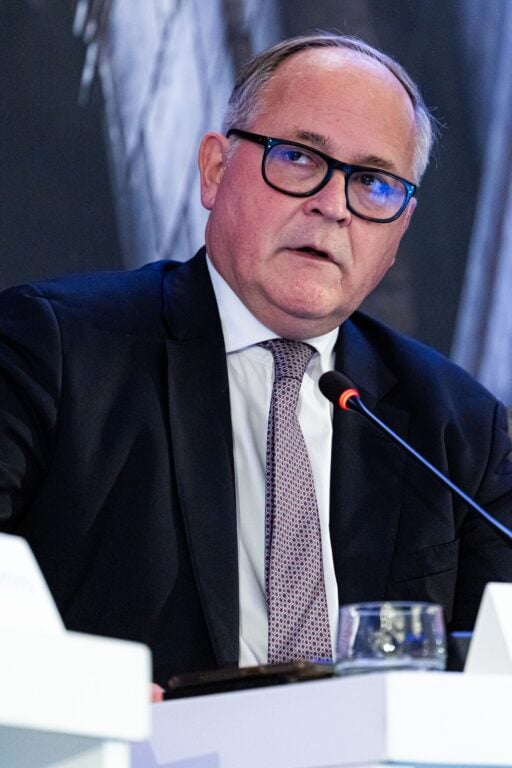
Benoît Coeuré (President, Autorité de la concurrence and Chair of the OECD Competition Committee) opened the “big picture” discussion on global trade: what began as a US–China trade war has now become a broader war on trade, challenging the rules-based system built over decades. In this environment, he saw two priorities for competition authorities: protecting enforcement and the rule of law from trade-driven pressure, and ensuring the right instruments are used for the right policy goals, rather than letting trade or industrial aims bleed into antitrust through the back door.
Historical context of tariff battles and the evolution of trade rules
Professor Paola Conconi (University of Oxford) placed current tariff battles in a historical context. From the General Agreement on Tariffs and Trade (GATT) in 1947 to the World Trade Organization (WTO), trade rules were designed to prevent a repeat of the 1930s by locking in multilateral liberalisation. China’s accession, negotiated on the assumption of convergence towards a market economy, instead produced a profound “China shock” of subsidised import competition. Traditional anti-dumping and countervailing tools, crafted for targeted subsidies in market economies, proved ill-suited to systematic state support, paving the way for unilateral measures and today’s more fragmented trade order.

UK perspective: Balancing competition, resilience and security
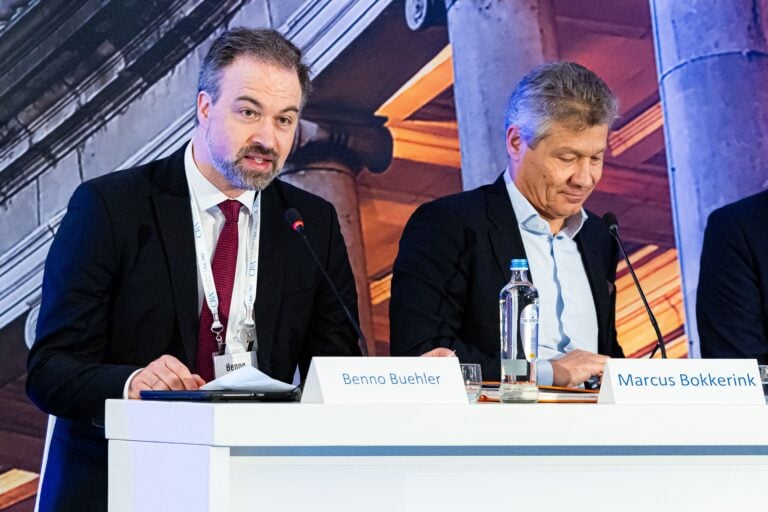
From a UK perspective, Marcus Bokkerink (former Chair, UK CMA) stressed that trade and competition policy still share core objectives – growth, innovation and consumer welfare – but resilience and security have become increasingly significant in the way competition is now evaluated. Competitive pressure that can be withdrawn overnight, whether due to geopolitics or supply-chain fragility, is not the same as robust domestic rivalry.

Emerging channels in global trade and competition policy
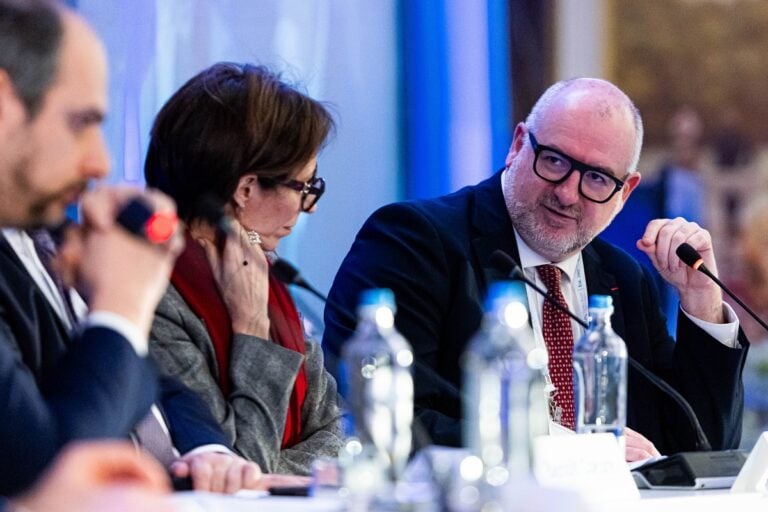
The session then turned to “new channels” through which trade now enters the competition arena. Denis Redonnet (Deputy Director-General, DG Trade) described how international trade relations have been “shaken at the core” by the US policy shift and China’s incomplete integration into the multilateral system. EU trade policy, he noted, has evolved from a focus on pure efficiency towards a suite of micro-policies centred on security and resilience. De-risking, in his view, will likely create “pockets of de-integration” rather than wholesale fragmentation, and policy must balance efficiency losses against reduced exposure to the “weaponisation of dependencies” – for example, export controls on critical inputs such as rare earths. Trade instruments are increasingly seen as enabling tools, part of a broader economic-security strategy alongside industrial and competition policy.
Core objectives in a changing trade landscape
Against that backdrop, Emanuele Tarantino (Chief Competition Economist, DG COMP) argued that while the environment has changed, competition policy’s core objectives should not: promoting consumer welfare, preserving competition and fostering the competitiveness and affordability of European markets. What must evolve, he suggested, is the understanding of how trade and industrial policy shape the context in which antitrust operates, and how to use a coherent “full toolbox” without turning competition enforcement into de facto trade defence.

EU Foreign Subsidies Regulation
On new instruments, Tarantino presented the Foreign Subsidies Regulation (FSR) as a targeted response to gaps left by WTO rules. FSR covers the case of services and investments (including acquisition), since these transactions are not captured by our existing trade tools law. The EU remains an open economy, he stressed, so the FSR must be enforced with “extreme care and balance” and not weaponised; its purpose is to prevent that foreign subsidies do distort competition in the internal market, not to close markets to foreign capital. Professor Conconi compared the FSR to countervailing duties: both seek to offset subsidies, but whereas duties fine-tune prices, the FSR can block transactions outright – a much blunter instrument that raises questions about whether more continuous, tailored remedies may sometimes be preferable.
Debate on European champions and merger control in trade and resilience policy
The panel also touched on “European champions” and whether merger control should internalise trade or resilience defences. President Coeuré was sceptical about importing a trade defence into competition tests: the economics often do not support it, and other, more transparent tools – such as FDI screening and sectoral regulation – are better suited to resilience objectives. Where societies want to prioritise security or industrial policy, that choice should be made explicitly and politically, rather than smuggled into competition analysis.
Balancing trade objectives and competition enforcement in a shifting global landscape
In a later segment on when trade goals collide with competition enforcement, Redonnet distinguished between legitimate linkages in trade negotiations and outright coercion, reiterating the Commission’s preference for a rules-based system over pure power politics. Bokkerink and Professor Conconi highlighted how complex, overlapping regimes create both uncertainty and opportunities – particularly for large multinationals with the resources to navigate and shape them – reinforcing, for several panellists, the need for strong, predictable and depoliticised competition enforcement as an anchor in an increasingly contested global trading system.
CRA will continue to provide economic analysis and strategic guidance as these policies evolve.
