

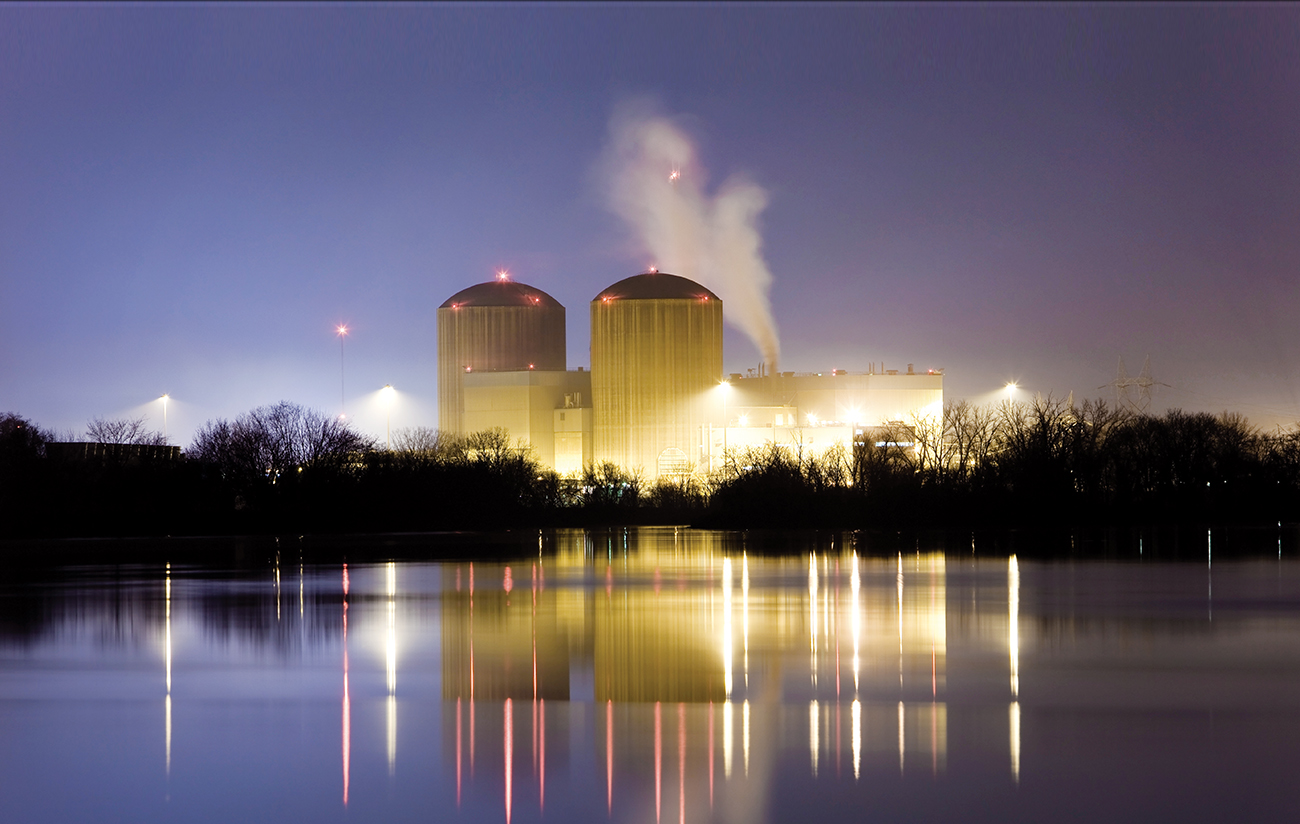
The role of nuclear in the global energy mix was pushed to the forefront due to the Ukraine War and impact on energy security.
Countries with cautious nuclear attitudes since Fukushima have started re-evaluating plans, cognizant of the role of nuclear in both achieving decarbonization goals and energy security. In parallel, technology progress for advanced nuclear has continued.
Key trends in 2022 for the nuclear sector…
Policy and regulatory support
- USA included incentives for nuclear in Inflation Reduction Act
- EU and UK labeled nuclear green
- Belgium and South Korea paused phase-out plans
- Direct support for advanced nuclear
Increased investment streams
- New level of investments in large-scale nuclear
- Increased private investment across a wide range of advanced reactors (e.g., SMRs, Sodium Fast
Reactors, Micro-Reactors, etc.)
Accelerated innovation
- Canada’s SMR Action Plan to build SMR value chain and develop/deploy projects
- UK Government’s Advanced Nuclear Fund allocated £385M
- US Government’s US$2.5B Advanced Reactor Demonstration Program
…unlocked opportunities for a global nuclear comeback – especially in North America & Europe
The global nuclear capacity is expected to double by 2050; a large proportion could be driven by advanced nuclear after 2030.
United States
- Significant technological progress by advanced nuclear developers
- Large investments and gov’t support for new nuclear builds, refurbishment projects, and life extensions
United Kingdom
- Great British Nuclear established to support building eight new reactors and 16 SMRs to produce 24 GW by 2050
- £210M in Government funding for RollsRoyce’s first SMR
Canada
- Strong public-private investments and policy initiatives in place to deploy first
SMR by 2028 - Canada’s Infrastructure Bank C$970M invest in OPG’s Darlington SMR Project
Poland
- Agreement established between GE Hitachi and Synthos Green Energy to deploy a BWRX-300 fleet by 2030
- Polish multinational KGHM and NuScale established SMR partnership
Czech Republic
- Government signed a Memorandum of Understanding with Holtec to examine the feasibility of implementing various SMR technologies
France
- Reversed course on reducing nuclear dependence – confirming cheapest scenario to achieve net zero involved the construction of a fleet of SMRs
- Plans introduced to build six new reactors and 12 SMR
CRA perspectives for nuclear developments in 2023 and beyond
Increasing policy support: Advanced nuclear likely to become more prominent in energy strategies and government investment strategies across the world.
Private investment: Effects of green taxonomy likely to encourage investment funds with a focus on sustainability to increase capital offerings to new nuclear projects.
Non-power nuclear application: Use of traditional and advanced nuclear for green hydrogen and process heating and grid stability.
Supply chain: Refurbishments and lifetime extensions of large nuclear; HALEU6 fuel requirements for advanced nuclear could require further investment in the supply chain to ensure availability for projects in North America and Europe in the 2030s.
Growth outlook: Near-term growth may come from extensions to existing fleet coupled with new builds, while long-term growth will likely be driven by advanced nuclear technologies such as SMRs, Sodium Fast Reactors, Micro-Reactors, and several others.
Sources/Notes:
1. Nuclear Power and Secure Energy Transitions – Analysis – IEA
2. Climate Change and Nuclear Power 2022 | IAEA
3. Nuclear Resurgence (imf.org)
4. NEI Magazine
5. Nuclear Energy – Our World in Data
6. High Assay Low Enriched Uranium